
Next Generation SMMP: Centralizing Small Meetings
You've secured senior-level buy-in, centralized all meetings functions, communicated your policies and implemented your SMMP. Now what? Are small meetings the next frontier? With so many companies embracing the power of meetings to market themselves, it only makes sense that the market is maturing. In searching for additional savings and efficiencies, small-meeting spend has now become the low-hanging fruit for many companies. While certainly there is great opportunity, it will undoubtedly be a challenge, even for those with mature strategic meeting management programs.
Gone are the days of unmanaged spend, large expense accounts and discretionary budgets. The pharmaceutical industry pioneered the concept of SMMP in the early 1990s and provided sparkling results impossible to ignore by other industries. By the sheer volume of meetings, larger companies like Pfizer, Bristol Myers Squibb and Eli Lilly were able to save tens of millions of dollars in their SMMP infancy stages, to rave reviews by their management teams.
Now SMMP is all the rage in corporate America, with roughly 60% of Fortune 1000 companies having a program in place. With annual savings typically around the 10% mark for successful implementations, CFOs and CEOs have been very pleased with the results. With decreased consumer spending, most companies are in cost cutting mode, which means they’ll be thinking if we cut that much off our meetings budget last time, surely we can cut costs further. With a solid small meetings strategy prepared and a plan of action ready to be put in place, you’ll be in a position to shine. In a time of economic uncertainty, this might help to avoid project cancellations, budget cuts and staff layoffs.
Whether you recognize it or not, there are plenty of ‘meetings’ happening off the books. Some stakeholders want to maintain control of their programs, and there are many ways to stay under the guidelines radar. The most common is to have one program billed over several invoices. Your first step to overcoming these sorts of issues should be soundly communicating the reasoning behind such centralization. It’s not about taking control, but sharing a common goal of cost reduction and doing more with less. Many culprits are internal DIY administrators who lack contract negotiation and risk management experience.
“MEETING IN A BOX”
Preferred-vendor contracts are a favorite tool for controlling the costs of small meetings. Negotiate tiered pre-packaged programs that the individual user can select, even for as little as five attendees. This approach should allow for cancellation clauses, room night rates, function room rentals, F&B and A/V. With short lead times a constant for small meetings, hotels face numerous challenges in responding to requests quickly. Try to send as many individual travelers to preferred hotels in order to create more value as a partner (and leverage spending).
Like the stock market, hotel occupancy and rates are down significantly (numbers here). Average U.S. occupancy was down 7% in the first week of October over the same period in 2007. Rates dropped 1% and revenue per available room slipped 8%. Luxury hotels took the brunt, with occupancy off 12%, rates down 5% and revenue declining 16% . Hotels are looking to boost revenue any way they can, and what better way to do it than with those who are already spending? But there are limits. Small meetings mean smaller budgets, and certain concessions attained by larger groups are not as feasible in the smaller realm.
There is no ‘template’ to this initiative that will suit every company and situation. Internal interviews, historical data analysis and supplier research need to be conducted more thoroughly. You may also want to look at how you receive data from hotels when an individual’s credit card is used. During the data collection phase it will become clear that a single form of payment strategy will make ongoing data collection much simpler.
MEETING CARDS
Corporations with meeting budgets near $10 million a year and a meeting policy in place were the early adopters of meeting cards. But any company that wants a better grip on meeting spend could benefit from a card program. Meeting cards work to corral spending, then as control, and eventually as a more efficient management tool. Under a typical invoice payment system, employees can select any expense code they want. As a result, many meeting expenses end up in a miscellaneous category, which makes gathering data even more difficult. By issuing these pre-populated cards to the DIY administrators, you might find that their unmanaged spend comes into clearer focus.
TECHNOLOGY AS AN ENABLER
Most large hotel chains have developed internal technology solutions that interface with the small meeting applications provided by companies such as StarCite and Concur. Recently StarCite has made a big push in the small meetings area with an online booking tool that allows customers to enter their own negotiated rates and contract terms into the system. Hyatt and Hilton have also expanded their offerings when it comes to small meetings, recognizing the importance to their corporate clients. Be mindful of the fees charged to the hotels by your technology provider, as it will definitely affect your pre-negotiated rates. Worktopia recently launched an online meeting space booking tool that can prove to be very helpful when lead times are extremely short.
Another effective solution to cutting costs using technology is to push as many of these smaller meetings online as possible. Webconferencing works particularly well with smaller internal meetings that regularly occur amongst regional sales teams. Many of these stakeholders book meeting space at a hotel out of habit, when their objectives can be accomplished much more effectively and economically by hosting a web meeting. Assure them that face to face meetings will never be abandoned, but reducing the sales teams travel expenses and time out of the office will benefit everyone’s bottom-line. There is no shortage of great providers: WebEx, GoToMeeting, Adobe, Microsoft, ON24, Saba and Genesys. For additional information on their offerings, CLICK HERE
TIME MANAGEMENT
One thing all planners are short on is time. Once you’ve negotiated your terms, outsource as many of the non-core components as possible. Centralize your business with a third party outsourcing firm you trust and let them manage the time-consuming details that arise. BUCOM has assisted numerous clients with arranging small meeting packages with very reasonable rates.
Whether you choose to negotiate packages with hotels, utilize new technologies or roll out a meeting card plan, you will undoubtedly face many challenges, particularly in this uncertain economic environment. Maintaining your focus on the big picture, which means not getting bogged down with all the minutiae, is paramount to success in such a large initiative.
Wednesday, October 22, 2008


Tuesday, October 14, 2008
IT&ME/Motivation Show
 The two-day Motivation Show, focused on meetings & incentives industry professionals, was again held in Chicago on September 23 & 24 at McCormick Center. Each year, industry suppliers from all over the world converge for the opportunity to meet and greet corporate and third-party meeting planners. Huge exhibits are set up, direct mail campaigns are executed, iPods are raffled off and bags are stuffed with marketing brochures. But the question remains, are the exhibitors able to recoup their investment?
Motivation (IT&ME for us old-timers) is rumored to become more of a tradition than a vital opportunity to meet potential buyers. The show is split up into two main categories, travel and promotional products. While traditionally the travel side had a much larger presence, it seems that the promotional products section has taken over the dominant position in recent years. The travel side is split into subsets of hotels, destinations, CVB’s, DMC’s and travel management agencies. The largest exhibitor, as one would imagine, was Las Vegas, however that represented a shared facility with such participants as Venetian, MGM and LVCVB.
Total exhibit space sold was down 10% over last year’s show, and attendance was dropped by 6%, which undoubtedly demonstrates the uneasiness being felt as a result of the financial market woes. Many planners had registered to attend and for one reason or another were not able to make it. “You had some planners simply not attend at all and others come as they have done each year,” commented Paul Buccheit, National Sales Manager at the Venetian/Palazzo. “The ones that do attend approach the show with a plan of attack on who they need to see, then they leave.” Review on MeetingsNet.
As in years past, many larger vendors hosted evening functions that seemed to get a much better turnout than their counterparts with only an exhibit booth. SITE hosted an affair at the Peninsula that attracted 700 attendees. Some of other highlights were private parties hosted by Starwood at the House of Blues, Hilton at the Conrad and Golden Triangle, Tahoe & Reno at Smith & Wollensky’s, LXR at the Peninsula, Express Jet at Elm Street Liquors, 3D Destinations Cocktail Cruise on Lake Michigan, Gaylord at Rockit and Switzerland at the Museum of Science & Industry.
“I also see the evenings just as valuable as the show floor, if not more, for networking with potential clients.” said Buccheit, whose company hosted a well-attended party at SushiSambaRio. “There is still value in seeing your clients and developing the relationship further so that when business does pick up you are the first person they call.”
While the majority of exhibitors at the show don’t have the budget to host such extravagant affairs, the ones that market their parties effectively, usually get a great turnout. While attendance is in decline, the show appears to be far from standing on its last leg. The show organizers also scheduled the show on the heels of Yom Kippur, which negatively affected attendance as well.
While the economic “slowdown” is certain to have had a tremendous effect on attendees from out of town, many meeting planners still see the show as an invaluable part to their yearly plans. Having all major hotels and destinations in one location can allow planners to see most of their key suppliers over the two day period. It will be interesting to see the percentage of exhibitors that return in 2009.
Are you Hungary?
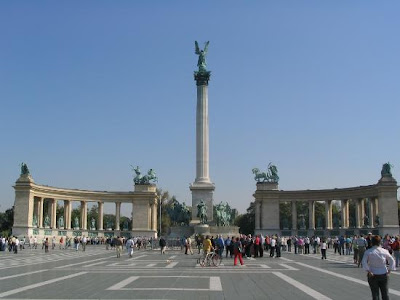
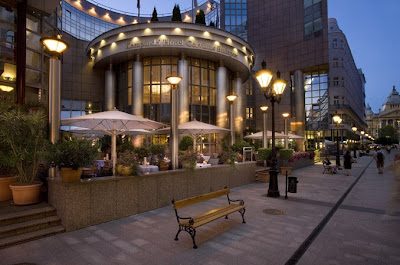 We just got back from a 3-day meeting in beautiful Budapest, Hungary. This capital city, with a population of more than two million residents, sits just down the Danube River from Vienna and is often overlooked by tourists.
Aside from all the sightseeing and local history to take in, one of the most interesting aspects of Budapest culture is the local cuisine. The famous Hungarian goulash is a must-have and is surprising when it turns out to be a spicy, thin soup instead of the thick stew I was expecting. There many more local delicacies that also should to be sampled. Shockingly, Budapest is known for it’s smoked goose liver, which everyone had to try. At first I was skeptical, but eventually I succumbed to peer pressure. To my surprise, it was really delicious... the perfect start to a fabulous meal!
One of our pharmaceutical clients needed to host an investigator meeting in a central European destination and asked BUCOM to recommend a solution. After an extensive search, BUCOM selected the Kempinski Hotel Corvinus Budapest. The meeting space was absolutely perfect for our client’s needs – all with close proximity and easy access to the business center. One of our favorite amenities provided by the Kempinski was complimentary wireless internet access EVERYWHERE in the hotel. You don’t even need a password to connect. This is very rare for a hotel of this size & stature, and was a huge convenience factor for our participants and staff alike.
The concierge staff at the Kempinski was extremely helpful, more so than the other properties we have worked with in Budapest. They went out of their way to ensure that our group was treated like VIPs. Not only did they assist us in pulling our shipments out of customs (which is very strict and notoriously slow) but also followed-up to ensure that they were delivered to our office as soon as they arrived to the hotel. They were very attentive and provided top-notch customer service to all of our attendees when called upon.
Since the hotel was located in the city center, the participants were able to see many of the most popular local attractions. The sightseeing highlights include Heroe’s Square (pictured above), Buda Castle, Szechenyi Public Baths, and the Museum of Applied Arts. If you have time, I also suggest the twilight dinner cruises on the Danube River.
All in all, the attendees had a very productive meeting and our client was extremely pleased with the outcome. While we have hosted many programs in Budapest over the last 20 years, the rave reviews from our client ensure that we will be returning again very soon.
Thursday, October 9, 2008
Second Life a viable meeting option?
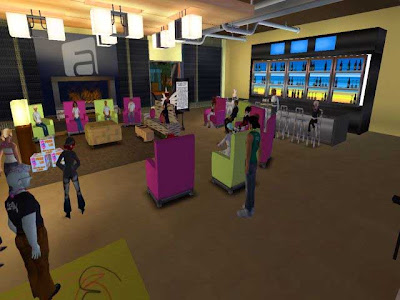 There is something very nerdy about virtual worlds and the folks that inhabit them way too much. One thing is certain, virtual worlds are going to have more and more real-life applications that will affect all of us in the meeting planning industry.
While you may have dismissed the possibility of hosting meetings & events in virtual worlds in the past, the new generation of information workers have a different attitude. All the Gen-Y kids coming out of Stanford, MIT, and Princeton, the business leaders in 10 years, all have "In-World" avatars that reflect their own preferences and personalities. One day (not too far away), these same avatars will be a confluence of Facebook profiles, V-Cards, LinkedIn profiles and more. Some of the world's largest companies have been investing heavily in Second Life for quite some time.
As meeting planners, we can't afford to ignore new technologies that will have a huge impact on the future of our industry. Imagine completing 10 site visits in one day, without ever leaving your office. Start thinking of the look on senior management's faces when you demonstrate the cost savings gained by having no airfare, no accommodations, no F&B. Are any of you currently using this technology past the demo stage? Is the push coming from your team or your IT department? If not, are any of you in discussion about it? Who is driving it, Meeting Planning, IT, Marketing/Sales or Senior Management?
Here is an interesting example: Virtual Forbidden City developed by IBM in partnership with the Palace Museum. It was designed to encourage people from all around the world to explore and learn about Chinese history and culture.
Starwood's new hotel chain aloft actually launched it's brand with virtual tours in Second Life before any of the properties were opened.
Dell Island (video) is another great example of how consumers can interact with products online. Not a believer yet? Check out the infinite possibilities at What is Scion City. While this is nothing more than an extended commercial, approaching it in a different fashion allows for more engagement. It's only a matter of time until the graphics in Second Life are as good as they are on Grand Theft Auto IV on X-Box 360.
Here an example that touches our political and mainstream media systems - John Edwards' 'In-World' Presidential Campaign mocked by John Stewart:
The business applications for meeting planners are endless, but once again a cultural/consumption shift will have to occur to make it useful. Planners need to anticipate the needs of their customers and attendees and and be there waiting for them when they walk through the door. Being prepared to offer this to our internal customers before they ask for it is what makes us valuable to our organizations.
Instead of a hosting a mandatory compliance training meeting in a boring conference center in some random suburb of Boston, you can host it in your virtual meeting room 'In-World' at your own branded meeting space/swim-up pool-bar, on a Pete Dye-designed golf course sitting on your private island in the Carribean.
Hey, you can dream, right? That's what makes Second Life so interesting. If you'd like to learn more, check out Millions of Us.
Tuesday, October 7, 2008
Southwest Continues it's Hot Streak

In addition to it's recent announcement of service to Minneapolis/St. Paul, Southwest recently announced special airport security lines for frequent travelers. Appropriately entitled "Fly By" security lanes will be open to Business Select passengers, in addition to elite members of their Rapid Rewards program.
The program will be rolled out later this month at Phoenix Sky Harbor International, Orange County John Wayne, Denver International, San Francisco International, Los Angeles International Baltimore/Washington International and Dallas Love Field. While the program is in it's launch phase, they anticipate rolling it out to all major hubs.
"Expediting passengers through security is just one example of how Southwest is enhancing the customer experience by offering added convenience for seasoned travelers," said Kevin Krone, vice president of marketing, sales and distribution.
With their huge win in gas price hedges a couple years ago, along with their financial strength, it seems while all other airlines are grasping at straws, Southwest is increasingly improving their position in the marketplace and with business travelers. While they have traditionally positioned themselves towards consumer travel, they are gaining more traction in the corporate market with their new programs and on-time flight arrivals and departures.
Monday, September 29, 2008
BUCOM named in Top 50 Event Companies by Special Events Magazine

It's always nice to be recognized as a leader in our industry. Thanks to Lisa Hurley, the Editor of Special Events Magazine. We appreciate your hard work and determination in this process.
Tuesday, September 16, 2008
NBTA Launching SMMP Certification Program
The National Business Travel Association will be offering a Strategic Meetings Management certification program within the next 12 months.
It will be interesting to see how many meeting planners complete this certification. My guess is that it will be quite successful, following in the footsteps of the CMP, CMM and CTSM programs.
It will be interesting to see how many meeting planners complete this certification. My guess is that it will be quite successful, following in the footsteps of the CMP, CMM and CTSM programs.
Monday, September 8, 2008
BUCOM International named in CMI 25 Top Meeting Planning Agencies. Again.

BUCOM INTERNATIONAL has been named to the second annual “CMI 25” list of the industry's largest and most influential full-service independent meeting and incentive travel management companies. Compiled by Penton Media's Corporate Meetings & Incentives® Magazine, the leading information source for the $40.3 billion corporate meetings and events industry, the CMI 25 provides an essential resource for corporate executives and meeting professionals seeking partners for outsourcing all or parts of their programs. The CMI 25 appears in the September issue of Corporate Meetings & Incentives and is available on www.meetingsnet.com.
“The CMI 25 list represents the leading companies in the industry, based on extensive research by our staff,” said Barbara Scofidio, editor of Corporate Meetings & Incentives Magazine. "As outsourcing of meeting and incentive travel program planning becomes increasingly important to corporate America, the CMI 25 have become the ‘go-to’ service providers for executives in many sectors.”
We thank CMI for the recognition, our clients for the inspiration and our team for it's dedication.
Tuesday, August 19, 2008
NY Airports Accept Clear Lanes

Great news for business travelers! As with many things, if NY is doing it, all other cities will soon follow (except for liking the Yankees).
Now if we can just get our flights to leave on time. If the Clear Card gets universally adopted across the country, it will be a major coup for meeting planners and also a fantastic gift idea for professionals.
Other airports online include Atlanta, Boston, Cincinnati, Denver, Dulles, Indianapolis, Jacksonville, JFK, LaGuardia, Newark, Oakland, Orlando, Reno, Salt Lake City, San Francisco, San Jose and Westchester.
Monday, August 18, 2008
Thursday, July 31, 2008
Great Slide Presentation on Social Media - by Marta Kagan
What is Social Media?I think we have all read enough about blogs, wikis, RSS feeds to have an idea of what they are about (if you don't know, you're participating right now!).
The BIG question facing Meeting Planners is: How can we embrace & harness their power to enhance our meetings & events? Watch the slideshow below, which has some terrific facts & figures.
We'd love to hear some feedback and get a discussion going on this topic. Stay tuned, more to come...
The BIG question facing Meeting Planners is: How can we embrace & harness their power to enhance our meetings & events? Watch the slideshow below, which has some terrific facts & figures.
We'd love to hear some feedback and get a discussion going on this topic. Stay tuned, more to come...
Thursday, July 24, 2008
Go for the gelato and host a meeting too!


It's hard to say what you'll find most breathtaking about the Eternal City - the opulence of the Vatican, trying to follow a confusing road map, the gory resonance of the Colosseum, trying to cross a major intersection, the bill for your morning coffee, or a Monitor Meeting? Of course, the Monitor Update Meeting!! BUCOM International operated a very successful international internal Monitor Meeting at the Hotel Exedra in Rome this past month. Participants from Russia, UK, Poland, Brazil, Romania, France, Sweden, and Germany to just name a few joined us for a very informative update meeting. The Hotel Exedra, a Boscolo Hotel offered the perfect location for the meeting with the mixture of old world Rome and new technology. The meeting rooms at the Hotel Exedra are perfect for smaller meetings up to 100 people with superior audio visual capabilities, numerous meeting and meal function rooms all on top the ancient Roman ruins. Where else can you look down through a glass floor and see structures dating back hundreds of years while you present or at your coffee break? The Hotel Exedra also offers modern, updated, beautifully decorated large rooms compared to many European hotels. Highlights of the program include a fabulous dinner at Tre Scalini Restaurant at Piazza Navona, pod cast of the sessions for all participants' future reference, and the enjoyment of all the sites and sounds of Rome. BUCOM's number 1 "can't miss" for Rome - the gelato!!!
Monday, July 21, 2008

Tuesday, June 24, 2008
UNIQUE LOCAL VENUES: THE RIVIERA THEATRE
One of the benefits of holding your meeting in a second-tier city is the accessibility of unique venues an reasonable prices. At a recent meeting held at the Charleston Place Hotel in beautiful Charleston, SC, our group had its reception and dinner function in the Riviera Theatre designed by architect Charles Collins Benton. Guests truly enjoyed the history and the atmosphere. With such a pronounced restaurant scene in the Charleston, we considered the evening’s 90% attendance a huge success!
The Riviera, an Art Deco treasure found on Charleston’s King Street, was built on the site of the Academy of Music in 1939. It is listed on the National Registry as part of one of city’s Historic Districts. The facade is of light stone trimmed with black. The vestibule and foyer are finished in black formica and chromium with background of flex wood, and above the entrance is a long mural depicting a scene of Lake Como. The theater opened with a modern heating and cooling system, the latest projection equipment, an automatic drop curtain and organ – and admissions prices of only 25¢! The opening film was "Secrets of a Nurse" with Edmund Lowe, Helen Mack, Dick Foran and Paul Hurst. This stunning theater was the home of first run pictures, on its fifty foot screen, until 1977.
The Riviera was leased to a church group in 1979 and by the mid-1980's, threatened with demolition. The Friends of the Riviera protected the theater and it was eventually sold to the Charleston Place Hotel (located just across the street) in 1993. The hotel soon launched a $4 million renovation project that would take four years to complete. The entire theater was restored save for the removal of the main floor seating to create a ballroom-style meeting space. The Riviera re-opened as a conference center and retail space, but more than 90 percent of the original interior had been restored. The beautiful murals were repaired or copied and the extraordinary plaster details look like they did in 1939. While its days as a single-screen movie theater are over, the Riviera Theater's history is preserved. It continues to serve the Charleston community and its architectural beauty will enchant visitors for decades to come.
Because this historic theatre is today wholly owned and operated by the Charleston Place, there was no rental fee for the space – just the food & beverage minimum from the meeting’s contract. Our Special Events Manager with the hotel helped to customize a menu perfect for our group’s size, palette and budget. Our set-up staff, bartender, and banquet staff were also through the hotel – and thus already familiar faces. Rental fees alone for similar space in a city like Chicago would cost thousands of dollars – and that is before factoring in off-site catering costs for furniture and linen rental, florals, etc. We were able to achieve an experience unique to Charleston for our client and guests without any additional expense.
Sources:
Melnick, Ross. “Riviera Theater.” Cinema Treasures.
http://cinematreasures.org/theater/284/
Author Unknown. “Riviera Theatre – Charleston, SC.” SC Movie Theatres.
http://www.scmovietheatres.com/chas_riv.html
Author Unknown. “Venues – Riviera Theatre & Conference Center.” Charleston Place.
http://www.orient-express.com/web/ocha/ocha_c3d1_riviera.jsp
The Riviera, an Art Deco treasure found on Charleston’s King Street, was built on the site of the Academy of Music in 1939. It is listed on the National Registry as part of one of city’s Historic Districts. The facade is of light stone trimmed with black. The vestibule and foyer are finished in black formica and chromium with background of flex wood, and above the entrance is a long mural depicting a scene of Lake Como. The theater opened with a modern heating and cooling system, the latest projection equipment, an automatic drop curtain and organ – and admissions prices of only 25¢! The opening film was "Secrets of a Nurse" with Edmund Lowe, Helen Mack, Dick Foran and Paul Hurst. This stunning theater was the home of first run pictures, on its fifty foot screen, until 1977.
The Riviera was leased to a church group in 1979 and by the mid-1980's, threatened with demolition. The Friends of the Riviera protected the theater and it was eventually sold to the Charleston Place Hotel (located just across the street) in 1993. The hotel soon launched a $4 million renovation project that would take four years to complete. The entire theater was restored save for the removal of the main floor seating to create a ballroom-style meeting space. The Riviera re-opened as a conference center and retail space, but more than 90 percent of the original interior had been restored. The beautiful murals were repaired or copied and the extraordinary plaster details look like they did in 1939. While its days as a single-screen movie theater are over, the Riviera Theater's history is preserved. It continues to serve the Charleston community and its architectural beauty will enchant visitors for decades to come.
Because this historic theatre is today wholly owned and operated by the Charleston Place, there was no rental fee for the space – just the food & beverage minimum from the meeting’s contract. Our Special Events Manager with the hotel helped to customize a menu perfect for our group’s size, palette and budget. Our set-up staff, bartender, and banquet staff were also through the hotel – and thus already familiar faces. Rental fees alone for similar space in a city like Chicago would cost thousands of dollars – and that is before factoring in off-site catering costs for furniture and linen rental, florals, etc. We were able to achieve an experience unique to Charleston for our client and guests without any additional expense.
Sources:
Melnick, Ross. “Riviera Theater.” Cinema Treasures.
http://cinematreasures.org/theater/284/
Author Unknown. “Riviera Theatre – Charleston, SC.” SC Movie Theatres.
http://www.scmovietheatres.com/chas_riv.html
Author Unknown. “Venues – Riviera Theatre & Conference Center.” Charleston Place.
http://www.orient-express.com/web/ocha/ocha_c3d1_riviera.jsp
SECOND-TIER CITIES: A NEW TREND?
Any list of current trends in meeting planning includes the use of second-tier cities to help control costs. But is this really a trend or just validation of what industry experts have already been saying for over a decade?
The internet has a never-ending supply of articles on the subject. This is not surprising. What is a bit unexpected is that the articles date from this year to as far back as 1992. Maybe the idea is not the trend, but effectively selling it to meeting stakeholders who traditionally use only top-tier cities is.
WHAT IS A SECOND-TIER CITY?
Perhaps the best place to start is with a definition of a Second-Tier City (STC). Academia defines STC’s based on economic structure, growth and labor – differentiating these distinct areas from suburbs or large metropolitan areas. But a location viable for a new plant or distribution center may not offer the proximity to major airports crucial to meeting destinations. Alternatively, the Meeting Planners Association sets population parameters for STC’s that range from 300,000 to 1 million. By the MPA’s standards, Washington, DC, Miami and Las Vegas are second-tier destinations (1), but these locations are not generally associated with cost savings.
It seems neither filter really offers a complete list of what stakeholders would consider realistic second-tier destinations that can suit their meeting’s needs. So for our purposes, STC’s will be defined with a broader brushstroke. Focusing specifically on domestic locations and excluding the ten most populous U.S. cities, think of cities characterized by affordability, accommodating residents, unique recreational happenings, easy air-access and first-rate hotels and convention/conference facilities. A few examples include: Indianapolis, IN; Charleston, SC; Nashville, TN; St. Louis, MO, San Jose, CA, Salt Lake City, UT and Louisville, KY.
As a sidebar, the term “easy air-access” also has a definition in flux. As airlines merge (like Northwest and Delta), they boast offering better service to more cities. However, the industry as a whole is simultaneously announcing that the cost of jet fuel will dramatically impact the number of cities serviced and the frequency of flights to ALL destinations – as early as October of this year. For this reason, if air travel is a concern we would recommend focusing on cities with international airports. These airports are typically called such because they are equipped with customs and immigrations facilities, but they are also usually larger facilities with longer runways that can accommodate larger aircraft. While service will still likely be reduced, it is less likely it will be discontinued all together.
WHAT BENEFITS CAN A SECOND-TIER CITY REALLY OFFER?
Besides rising hotel costs, so-called “mega-cities” are also increasing their focus on strengthening transient business – meaning groups may no longer be able to achieve the perks and concessions to which they have grown accustomed. To maintain the proverbial “big fish” feeling, site selection in second-tier cities offers more small ponds from which to choose. (2)
Stakeholders and meeting attendees alike are looking for customized service, high-quality facilities, an experience memorable enough to make it worth the trip and of course, affordability. STC’s unique circumstances can provide all of these benefits for your group.
CUSTOMIZED SERVICE
One of the best service resources in an STC is the local Convention and Visitors Bureau or CVB. Eager to showcase their city, the CVB will often do whatever it takes to get your business – and keep it. Outstanding, customized service begins during the planning phase, but lasts through on-site execution. Not only do they often have regional sales forces that sit locally in other cities, but a CVB offers an unparalleled-network of local suppliers and avenues for cross-marketing your event. The staff at a CVB is generally happy to act as an extension of your meeting planning and logistics-company. They can also provide access to unique spaces like museums, city parks or historical venues. A CVB’s connections to and relationships with local talent and attractions should be leveraged and not overlooked. These components offer tremendous added value and in smaller cities come at a much smaller price tag (3) than in say Manhattan, Chicago or Los Angeles.
Larger groups, especially, often take up the majority of the available meeting and hotel space in smaller cities. Without competing distractions for the venue’s on-site staff, these groups are essentially guaranteed undivided attention and a high level of service. No request or need is ignored. From event-branded signage throughout the city to designated public transportation vehicles, the city’s doors are opened. In this way, not only meeting planners but also attendees witness how keen these cities are for your business. (4)
HIGH-QUALITY FACILITIES
Luckily for today’s meeting stakeholders, the idea of smaller cities getting an increased market share of the events business is not new. As Katie O’Bryan, Director of Midwest Sales for the Louisville CVB says, STC’s “have been consistently popular for education, nursing, agriculture and religious groups for a long time”. Hence improvements to the infrastructure of these cities – including the building and expansion of state-of-the-art conference and convention centers, hotel inventory and airports – have been in the works since the early 1990’s. (5) First-class amenities in these cities are the norm far more often than the exception. Now, however, they are finally drawing the attention of industries that traditionally looked only to top-tier cities for meeting destinations.
To get the word out about new, top-notch facilities, many markets have teamed the sales forces of their convention center with that of the local CVB. In this way, the smaller cities remain competitive by offering a more customizable product than larger cities. The San Jose Convention Center for instance offers a flexible pricing structure based on a group’s overall economic impact on the community (including room nights, food & beverage, equipment rental, etc.). (6)
Also with a little bit of creativity, issues that might initially appear as obstacles may not be. Even though many smaller cities have added top-tier hoteliers to their portfolio, they often still cannot accommodate a large group under one roof. Nevertheless, these same destinations usually have a far more cohesive hotel community than in larger cities. Working as a unit instead of against each other, multiple property representatives develop a housing plan for your group and create a seamless transportation schedule for moving attendees between meeting facilities and guest accommodations. (7) This is just another example of how second-tier cities will do whatever it takes to get your business.
MEMORABLE EXPERIENCES
The internet has a never-ending supply of articles on the subject. This is not surprising. What is a bit unexpected is that the articles date from this year to as far back as 1992. Maybe the idea is not the trend, but effectively selling it to meeting stakeholders who traditionally use only top-tier cities is.
WHAT IS A SECOND-TIER CITY?
Perhaps the best place to start is with a definition of a Second-Tier City (STC). Academia defines STC’s based on economic structure, growth and labor – differentiating these distinct areas from suburbs or large metropolitan areas. But a location viable for a new plant or distribution center may not offer the proximity to major airports crucial to meeting destinations. Alternatively, the Meeting Planners Association sets population parameters for STC’s that range from 300,000 to 1 million. By the MPA’s standards, Washington, DC, Miami and Las Vegas are second-tier destinations (1), but these locations are not generally associated with cost savings.
It seems neither filter really offers a complete list of what stakeholders would consider realistic second-tier destinations that can suit their meeting’s needs. So for our purposes, STC’s will be defined with a broader brushstroke. Focusing specifically on domestic locations and excluding the ten most populous U.S. cities, think of cities characterized by affordability, accommodating residents, unique recreational happenings, easy air-access and first-rate hotels and convention/conference facilities. A few examples include: Indianapolis, IN; Charleston, SC; Nashville, TN; St. Louis, MO, San Jose, CA, Salt Lake City, UT and Louisville, KY.
As a sidebar, the term “easy air-access” also has a definition in flux. As airlines merge (like Northwest and Delta), they boast offering better service to more cities. However, the industry as a whole is simultaneously announcing that the cost of jet fuel will dramatically impact the number of cities serviced and the frequency of flights to ALL destinations – as early as October of this year. For this reason, if air travel is a concern we would recommend focusing on cities with international airports. These airports are typically called such because they are equipped with customs and immigrations facilities, but they are also usually larger facilities with longer runways that can accommodate larger aircraft. While service will still likely be reduced, it is less likely it will be discontinued all together.
WHAT BENEFITS CAN A SECOND-TIER CITY REALLY OFFER?
Besides rising hotel costs, so-called “mega-cities” are also increasing their focus on strengthening transient business – meaning groups may no longer be able to achieve the perks and concessions to which they have grown accustomed. To maintain the proverbial “big fish” feeling, site selection in second-tier cities offers more small ponds from which to choose. (2)
Stakeholders and meeting attendees alike are looking for customized service, high-quality facilities, an experience memorable enough to make it worth the trip and of course, affordability. STC’s unique circumstances can provide all of these benefits for your group.
CUSTOMIZED SERVICE
One of the best service resources in an STC is the local Convention and Visitors Bureau or CVB. Eager to showcase their city, the CVB will often do whatever it takes to get your business – and keep it. Outstanding, customized service begins during the planning phase, but lasts through on-site execution. Not only do they often have regional sales forces that sit locally in other cities, but a CVB offers an unparalleled-network of local suppliers and avenues for cross-marketing your event. The staff at a CVB is generally happy to act as an extension of your meeting planning and logistics-company. They can also provide access to unique spaces like museums, city parks or historical venues. A CVB’s connections to and relationships with local talent and attractions should be leveraged and not overlooked. These components offer tremendous added value and in smaller cities come at a much smaller price tag (3) than in say Manhattan, Chicago or Los Angeles.
Larger groups, especially, often take up the majority of the available meeting and hotel space in smaller cities. Without competing distractions for the venue’s on-site staff, these groups are essentially guaranteed undivided attention and a high level of service. No request or need is ignored. From event-branded signage throughout the city to designated public transportation vehicles, the city’s doors are opened. In this way, not only meeting planners but also attendees witness how keen these cities are for your business. (4)
HIGH-QUALITY FACILITIES
Luckily for today’s meeting stakeholders, the idea of smaller cities getting an increased market share of the events business is not new. As Katie O’Bryan, Director of Midwest Sales for the Louisville CVB says, STC’s “have been consistently popular for education, nursing, agriculture and religious groups for a long time”. Hence improvements to the infrastructure of these cities – including the building and expansion of state-of-the-art conference and convention centers, hotel inventory and airports – have been in the works since the early 1990’s. (5) First-class amenities in these cities are the norm far more often than the exception. Now, however, they are finally drawing the attention of industries that traditionally looked only to top-tier cities for meeting destinations.
To get the word out about new, top-notch facilities, many markets have teamed the sales forces of their convention center with that of the local CVB. In this way, the smaller cities remain competitive by offering a more customizable product than larger cities. The San Jose Convention Center for instance offers a flexible pricing structure based on a group’s overall economic impact on the community (including room nights, food & beverage, equipment rental, etc.). (6)
Also with a little bit of creativity, issues that might initially appear as obstacles may not be. Even though many smaller cities have added top-tier hoteliers to their portfolio, they often still cannot accommodate a large group under one roof. Nevertheless, these same destinations usually have a far more cohesive hotel community than in larger cities. Working as a unit instead of against each other, multiple property representatives develop a housing plan for your group and create a seamless transportation schedule for moving attendees between meeting facilities and guest accommodations. (7) This is just another example of how second-tier cities will do whatever it takes to get your business.
MEMORABLE EXPERIENCES
To truly make a meeting or event memorable for your group you must provide opportunities attendees would not have had on their own. This is why meeting planners seek out unique entertainment options in any location. But to obtain a competitive edge, STC’s see this as more substantial than a single activity – it is about developing a total branded experience.
Louisville, KY is a great example of this. O’Bryan explains that “what Napa is to wine, Louisville is to bourbon.” Her colleague Lisa LeCompte, Senior Sales Manager Louisville CVB, explains that their close access to the “Kentucky Bourbon Trail” creates great entertainment options - even beyond just distillery tours - such as an “Urban Bourbon Tasting Tour” through some of the more storied taverns of Louisville or a keynote by Bill Samuels Jr., President & CEO Maker’s Mark.
What is unique about your destination? What is its historical significance? What are the cultural assets of the city and how can they parlay into something attendees will never forget? These are the questions smaller city CVB’s are asking themselves and their Chambers of Commerce before designing a message to sell to meeting planners.8 Playing to these strengths and linking them to the needs of the client’s industry can actually make STC’s more appropriate for a meeting than traditional mega-destinations. (9)
The combined efforts of convention centers, hotel communities and CVB’s are also very effective for reinforcing your meeting’s brand throughout a city. According to Greg Deininger, VP of Sales & Marketing for the St. Louis Convention & Visitors Commission, they are “one team speaking with one voice, which makes it easier for the customer. We have one board, one sales and marketing force, one group of people looking at the value of a group in terms of room (tax and hotel occupancy), as well as convention center revenue." (10) He further explains that they “put banners on the streets, place signage in the malls and give the hotels welcoming ribbons." This sort of welcome into a city is bound to have a positive impact on your brand and make a lasting impression on your attendees.
AFFORDABILITY
For groups that traditionally use top-tier destinations, affordability is generally the major contributing factor in looking to STC’s for their programs. This is especially true in a struggling economy. But “affordability” is really more of an umbrella term. It can encompass broader strategic moves such as holding regional meetings to limit/eliminate travel and overnight hotel costs or reducing the length of the meeting to reduce lost productivity because employees are not out of the office as long. It can be indicative of the overall impression of the expensiveness of a city/destination, or more specifically refer to itemized costs like airfare, ground transportation, hotel rates or catering expenses. Below is a sampling of cost-comparisons for the budget line-items just mentioned. With a few exceptions, STC’s offer notable savings.
AIRFARE
Chicago to St. Louis - $159/Southwest; $165/American
Chicago to Louisville - $157.50/Southwest; $164/United
Chicago to New York - $285/United and American
Chicago to Miami - $350/American
Chicago to Las Vegas - $366.50/Southwest; $474/USAir
Chicago to Minneapolis-$373/United, American & NWA
(Prices published on Orbitz.com and Southwest.com for non-stop, roundtrip airfare as of June 23, 2008. Flights are departing at approximately 8:00am, August 4, 2008 and returning at approximately 7:00pm, August 6, 2008.)
Chicago to Louisville - $157.50/Southwest; $164/United
Chicago to New York - $285/United and American
Chicago to Miami - $350/American
Chicago to Las Vegas - $366.50/Southwest; $474/USAir
Chicago to Minneapolis-$373/United, American & NWA
(Prices published on Orbitz.com and Southwest.com for non-stop, roundtrip airfare as of June 23, 2008. Flights are departing at approximately 8:00am, August 4, 2008 and returning at approximately 7:00pm, August 6, 2008.)
HOTEL COST
Denver - $189
Cleveland - $229
St. Louis, MO - $299
Boston, MA - $395
San Francisco - $469
New York, NY - $645
(Prices published on RitzCarlton.com for the nightly rate for a standard guestroom with 1 King or 2 Double beds at the Ritz-Carlton in each city for the night of July 1, 2008.)
HOTEL OCCUPANCY/TOURISM TAX RATES
Las Vegas, NV – 9%
San Jose, CA – 10%
Little Rock, AR – 11.5%
Charleston, SC – 12.5%
New York, NY – 13.375% plus $3.50/night
Los Angeles, CA – 14%
GROUND TRANSPORTATION
Charleston, SC - $30
Cincinnati, OH - $70
Louisville, KY - $75
New York, NY - $168
San Francisco, CA - $175
Chicago, IL - $199
(Prices provided are for one-way sedan service from the relevant city airport to downtown hotels.)
GALLON OF COFFEE, SERVICE CHARGES AND F&B TAX
The Shore Club, Miami Beach, FL - $48.00, 20%, 7%
Westin Atlanta Airport, Atlanta, GA - $50.00, 22%, 7%
Westin Bonaventure Hotel & Suites, Los Angeles, CA - $60.00, 22%, 8.25%
Ritz-Carlton Reynolds Plantation, Greensboro, GA - $65.00, 20%, 7%
Charleston Place, Charleston, SC - $78.00, 20%, 9.5%
Marriott Marquis Time Square, New York, NY - $104.00, 22%, 8.375%
(Prices published in each property’s current catering menus.)
One important thing to keep in mind too is that smaller markets may be more willing to negotiate on meeting space rental, hotel and food and beverage charges in order to win your business. They may also have more flexibility with concessions such as complimentary upgrades, VIP amenities or designing packages that will be attractive to attendees and your bottom line.
SUMMARY
Even as prices continue to escalate in major hub locations destinations and tight budgets further constrict meeting spend, stakeholders still want to exceed their attendees’ expectations. Hence, the use of second-tier cities as meeting destinations will emerge as a key business strategy in more and more industry verticals. This may require a leap of faith to start, but if you can demonstrate that you have taken into account criteria that are important to both participants as well as stakeholders you will get their attention. With proper research and partnership with CVB’s, the quality customer service, meeting facilities, memorable experiences and economic benefits will speak for themselves.
SOURCES
1. Sweeney, Mark M. “Second-Tier Cities: The Right Size at the Right Cost”. Business Facilities: The Location Advisor. February 2004. http://www.businessfacilities.com/bf_04_02_cover.asp
2. Tesar, Jenny. “Second-Tier Cities: Do they still have the "big fish-small pond" advantage?”. Medical Meetings. February 1995.
2. Tesar, Jenny. “Second-Tier Cities: Do they still have the "big fish-small pond" advantage?”. Medical Meetings. February 1995.
http://meetingsnet.com/medicalmeetings/meetings_firstclass_service_secondtier/
3. Kovaleski, Dave and McGee, Regina. “ How to Score With Second-Tier Cities”. Associations & Meetings. June 2004.
http://meetingsnet.com/associationmeetings/meetings_score_secondtier_cities/
4. Author Unknown. “First-Class Service at Second-Tier Prices”. Medical Meetings. June 1997.
http://meetingsnet.com/medicalmeetings/meetings_firstclass_service_secondtier/
5. Author Unknown. “First-Class Service at Second-Tier Prices”. Medical Meetings. June 1997.
http://meetingsnet.com/medicalmeetings/meetings_firstclass_service_secondtier/
6. Kovaleski, Dave and McGee, Regina. “ How to Score With Second-Tier Cities”. Associations & Meetings. June 2004.
http://meetingsnet.com/associationmeetings/meetings_score_secondtier_cities/
7. Tesar, Jenny. “Second-Tier Cities: Do they still have the "big fish-small pond" advantage?”. Medical Meetings. February 1995.
3. Kovaleski, Dave and McGee, Regina. “ How to Score With Second-Tier Cities”. Associations & Meetings. June 2004.
http://meetingsnet.com/associationmeetings/meetings_score_secondtier_cities/
4. Author Unknown. “First-Class Service at Second-Tier Prices”. Medical Meetings. June 1997.
http://meetingsnet.com/medicalmeetings/meetings_firstclass_service_secondtier/
5. Author Unknown. “First-Class Service at Second-Tier Prices”. Medical Meetings. June 1997.
http://meetingsnet.com/medicalmeetings/meetings_firstclass_service_secondtier/
6. Kovaleski, Dave and McGee, Regina. “ How to Score With Second-Tier Cities”. Associations & Meetings. June 2004.
http://meetingsnet.com/associationmeetings/meetings_score_secondtier_cities/
7. Tesar, Jenny. “Second-Tier Cities: Do they still have the "big fish-small pond" advantage?”. Medical Meetings. February 1995.
http://meetingsnet.com/medicalmeetings/meetings_firstclass_service_secondtier/
8. Mascari, Patricia A. “ Second-tier cities, first-rate partners” . Association Management. November 1992. http://www.encyclopedia.com/doc/1G1-14569363.html
9. Sherman, Patricia. “Marketing/Promotions: Meeting Attendance Goals for Shows in the West.” Expo Web. Feb. 2006.
http://www.expoweb.com/Marketing_Promotions/2006FebMeetingattendancegoalsforshowsintheWest.htm
10. Tesar, Jenny. “Second-Tier Cities: Do they still have the "big fish-small pond" advantage?”. Medical Meetings. February 1995.
8. Mascari, Patricia A. “ Second-tier cities, first-rate partners” . Association Management. November 1992. http://www.encyclopedia.com/doc/1G1-14569363.html
9. Sherman, Patricia. “Marketing/Promotions: Meeting Attendance Goals for Shows in the West.” Expo Web. Feb. 2006.
http://www.expoweb.com/Marketing_Promotions/2006FebMeetingattendancegoalsforshowsintheWest.htm
10. Tesar, Jenny. “Second-Tier Cities: Do they still have the "big fish-small pond" advantage?”. Medical Meetings. February 1995.
Monday, May 19, 2008
Incentive spending level in 2008
A total of $46.1 billion was spent by U.S. companies on incentive travel and merchandise in 2006, according to the “Federation Study 2007: A Study of the Incentive Merchandise and Travel Marketplace,” sponsored by the Incentive Federation and conducted and prepared by GfK, the fourth largest marketing research organization in the world. That total represents a significant increase from the just-under-$30 billion figure that was reported in the Federation’s last comprehensive survey in 2000. It also represents $32.7 billion spent on incentive merchandise and $13.4 billion on incentive travel.
In addition to budget figures, the report looks at how merchandise and travel incentives are being used. According to the study, some 34% of U.S. companies overall used either travel or merchandise incentives last year, with 31% using merchandise and 10% making use of travel incentives. The average budget for travel incentives in 2006 was $164,271, with more than three-quarters of incentive travel end-users spending between $100,000 and $500,000. The typical budget for merchandise incentives was lower - $119,008 – and just under half of merchandise incentive users spent between $100,000 and $500,000.
BA's new high-end air franchise: OpenSkies
 British Airways just received DOT approval to operate a premium-class focused airline between Paris (ORY) in New York (JFK) in June. Check out their blog: http://flyopenskies.com/
Oil and gas prices up, premium air demand down, US inflation & recession, and increased corporate compliance policies are NOT going to stand in their way. Godspeed OpenSkies, we'll be pulling for you.
MPI FutureWatch 2008 Report Out
If you're a stats & numbers sort of person (odds are, if you are reading this, you are required to be) you will enjoy this report. http://www.mpiweb.org/CMS/uploadedFiles/Mortar/FutureWatch%202008%20Report.pdf It's tough for me to read this type of report on a pdf so (sorry green people, I did however recycle the paper) I had to print it out and read it that way.
There is one fundamental flaw that keeps bugging me about this report. MPI is a great organization, don't get me wrong. I am a member. So are my colleagues, competitors, suppliers AND customers... a pretty diverse mix. So, the actual percentage of the participants in the polls that are ACTUAL END-USER PLANNERS can't be (by my best estimate) more than 30% . Which means 70% of the data is flawed. I filled out this survey and I don't plan meetings per se. But most of the people who filled out this survey (myself included) are very interested in seeing the meetings industry flourish, thus bringing my to me original point: 70% of the data is from people with an overly "sunny" disposition regarding the industry.
That being said, there are some really great points in the report. While almost all planners are being asked to make the filet mignon dinner from sandwich and potato chip budget, one thing is for certain, there are more picnics in the plans.
There is one fundamental flaw that keeps bugging me about this report. MPI is a great organization, don't get me wrong. I am a member. So are my colleagues, competitors, suppliers AND customers... a pretty diverse mix. So, the actual percentage of the participants in the polls that are ACTUAL END-USER PLANNERS can't be (by my best estimate) more than 30% . Which means 70% of the data is flawed. I filled out this survey and I don't plan meetings per se. But most of the people who filled out this survey (myself included) are very interested in seeing the meetings industry flourish, thus bringing my to me original point: 70% of the data is from people with an overly "sunny" disposition regarding the industry.
That being said, there are some really great points in the report. While almost all planners are being asked to make the filet mignon dinner from sandwich and potato chip budget, one thing is for certain, there are more picnics in the plans.
Socially-conscious Incentives
Design your incentives and meetings to drive behavior, reward performers, and have a societal impact at the same time. More and more companies are focusing their incentive programs to philanthropic efforts by adding charity and social work components to their events.
One of our large pharmaceutical clients established a partnership with a major transplant foundation, without any press or hoopla. They donate all the air & hotel points that their department accumulates to families who cannot afford the high cost of accompanying their spouse/children to out of town procedures. To date, they have assisted more than 30 families in this program. If you ask me, that is the sincerest form of giving, mainly because they took painstaking efforts to ensure that nobody will ever hear about it.
What would really have the most impact would be to find a needy cause that is near and dear to your business, so that you can tie it
The following are a few additional worthy causes:
Susan G. Komen: http://cms.komen.org/komen/Partners/CorporatePartners/index.htm
Toys for Tots: http://www.toysfortots.org/donate/default.asp
Build-a-Bike: http://www.leadersinstitute.com/teambuilding/buildabike.html
Habitat for Humanity: http://www.habitat.org/cd/local/
Ronald McDonald House: http://www.rmhc.com/volunteer/
Boys & Girls Club of America: http://www.bgca.org/programs/
Red Cross: http://www.redcross.org/services/volunteer/0,1082,0_325_,00.html
This is not necessarily an incentive, but a great article on how an association can use their members to collectively make a huge impact: http://meetingsnet.com/financialinsurancemeetings/news/financial_services_society_0507/
As we all know, incentives are a powerful method to drive results from your sales teams. Incorporating social responsibility into your program can help build teamwork and goodwill, while hopefully generating some well-deserved PR.
One of our large pharmaceutical clients established a partnership with a major transplant foundation, without any press or hoopla. They donate all the air & hotel points that their department accumulates to families who cannot afford the high cost of accompanying their spouse/children to out of town procedures. To date, they have assisted more than 30 families in this program. If you ask me, that is the sincerest form of giving, mainly because they took painstaking efforts to ensure that nobody will ever hear about it.
What would really have the most impact would be to find a needy cause that is near and dear to your business, so that you can tie it
The following are a few additional worthy causes:
Susan G. Komen: http://cms.komen.org/komen/Partners/CorporatePartners/index.htm
Toys for Tots: http://www.toysfortots.org/donate/default.asp
Build-a-Bike: http://www.leadersinstitute.com/teambuilding/buildabike.html
Habitat for Humanity: http://www.habitat.org/cd/local/
Ronald McDonald House: http://www.rmhc.com/volunteer/
Boys & Girls Club of America: http://www.bgca.org/programs/
Red Cross: http://www.redcross.org/services/volunteer/0,1082,0_325_,00.html
This is not necessarily an incentive, but a great article on how an association can use their members to collectively make a huge impact: http://meetingsnet.com/financialinsurancemeetings/news/financial_services_society_0507/
As we all know, incentives are a powerful method to drive results from your sales teams. Incorporating social responsibility into your program can help build teamwork and goodwill, while hopefully generating some well-deserved PR.
Airlines adding MORE fuel surcharges
American, Continental, Northwest, United and US Airways each matched a move by Delta Air Lines to add another $20 to fuel surcharges on short- and long-haul tickets, according to airfare watchers. Tom Parsons of BestFares.com said the price hike marked the "11th successful attempt since Dec. 20, 2007." FareCompare's Rick Seaney noted that many Delta fares now carry a roundtrip surcharge of $130. "This means the total fuel surcharge combined with taxes and fees costs more than the actual base airfare on several short-haul domestic flights," according to Seaney. British Airways raised passenger fuel surcharges on all tickets, ranging from £6 (US$11.83) to a total of £26 (US$51.27) for short-haul roundtrip tickets and £30 (US$59.16) to a total of £158 (US$311.55) for the longest roundtrip flights. Other carriers recently upping surcharges include Air France, Korean Air and Thai Airways. Qantas raised all international ticket prices by 3 percent.
Thursday, May 15, 2008
Incentive in Dublin


A multinational CPG manufacturer took their top performers to
Airline consolidation good for meeting planners?
United is bankrupt. Now United is merging with Delta. Oh, wait, no... United is merging with Continental. No, hang on a sec, United and U.S. Airways are merging. Delta and Northwest. Lufthansa and ….
When senior executives from the airline industry and FAA officials both have no idea what they are doing next, how are we as we as planners supposed to sift through all the clutter to ensure we are making the right decisions for our companies? With all the airlines teetering on the brink of bankruptcy (ATA, Frontier, Aloha and Skybus being recent casualties), the dark cloud of dissolution looming, how do we make strong and confident long-term decisions on preferred providers? The answer... don't.
Meeting planners who arrange meetings near airport hubs will most certainly be affected by the recent changes. The current consolidation will absolutely reduce capacity, increase demand, and increase prices in most second-tier hubs. Delta and Northwest have said that they have no plans to cut any hubs, but that seems to be a fairly premature statement. One which we've all learned, in one way or another, should not be trusted.
As for the correct answer to the question posed in this article, there is none. Every company needs to look at their own travel spend, policies and level of mandate before making any commitments. Here is a great interview with Siemens Shared Services' Director of Mobility:
http://www.management.travel/news.php?cid=Steven-Schoen-Siemens.May-08.14 which was a follow-up on this initial report: http://www.procurement.travel/news.php?cid=Siemens-policy-compliance.Jul-07.23
I posted these links because they discuss how a global company with 40 separate business units consolidated air spend with terrific results.
Subscribe to:
Posts (Atom)

 Posts
Posts

